Put a cost on the problem behind the technical evaluation.
A free one-page canvas for working out, with your champion, what the problem costs, so a technical win arrives with a business case the budget holder can check.
What it does for the evaluation
For a technical win that has to become a business case.
Faced with a complex decision, a customer’s default choice is often to change nothing.
A case for change
The cost of the problem goes on the page first, in the customer’s own numbers, so the decision becomes a comparison between two figures they understand. It gives them a reason to act, and gives you a business case they helped build.
The value is hard to get across to every stakeholder.
A story everyone can follow
The canvas shows the link between each part of the deal: the problem, what it costs, what the solution changes, and what that change costs. The argument can be followed from one box to the next, with less room for misinterpretation.
With several people involved, they can come away with different pictures of the deal.
One page everyone agrees on
The problem and the proposed solution fit on one page that your contact, their boss, finance and your own team can each read in a few minutes.
Where it matters most for you
Deep technical discovery and pre-sales work. The canvas isn’t a technical framework, but when you’re about to invest in deep technical discovery and pre-sales costs, defining the fit between the problem and the solution matters even more. Don’t invest those resources unless both sides agree it makes sense, and the canvas is how you confirm that.
The toolkit adds a section of technical-evaluation questions and a half-page in the book on handing the deal back to the account executive.
It also has a proof-of-concept plan that turns each Must into a test with a pass mark, an owner, a date and each side’s cost, and a worked example of a canvas that comes out negative, with the words for your account executive and the customer.
The canvas, box by box
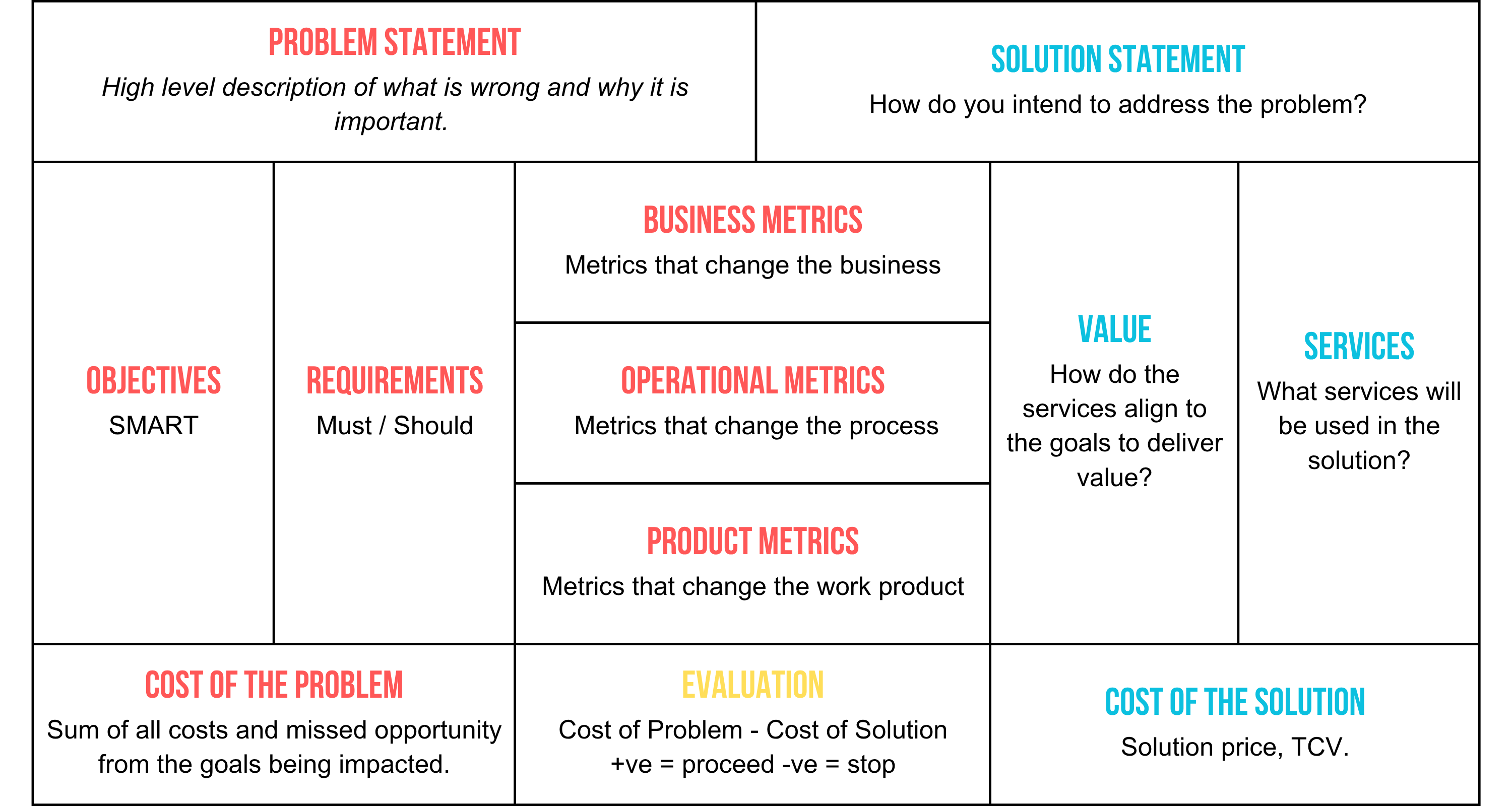
Twelve boxes on one page. The problem goes on the left, the solution on the right, the three metrics in the middle, and the two costs and the evaluation along the bottom. Each box says what goes in it.
+ve = proceed -ve = stop
Get the blank canvas
A client faced with a price, who has yet to appreciate the cost of their problem, is unable to buy.
A proof of concept shows the product works. The canvas puts the cost of the problem next to it, in figures the customer has agreed. You and your champion write the problem down and measure it in three ways: business, operational and product metrics. Those measures add up to the cost of the problem.
Then you set out the solution, what it changes in the same metrics, and what it costs. The last box sets one cost against the other over the contract term, on a page your champion can take to the person who signs. If your team uses MEDDICC, here is how the canvas fits alongside it.
How the canvas works
Problem
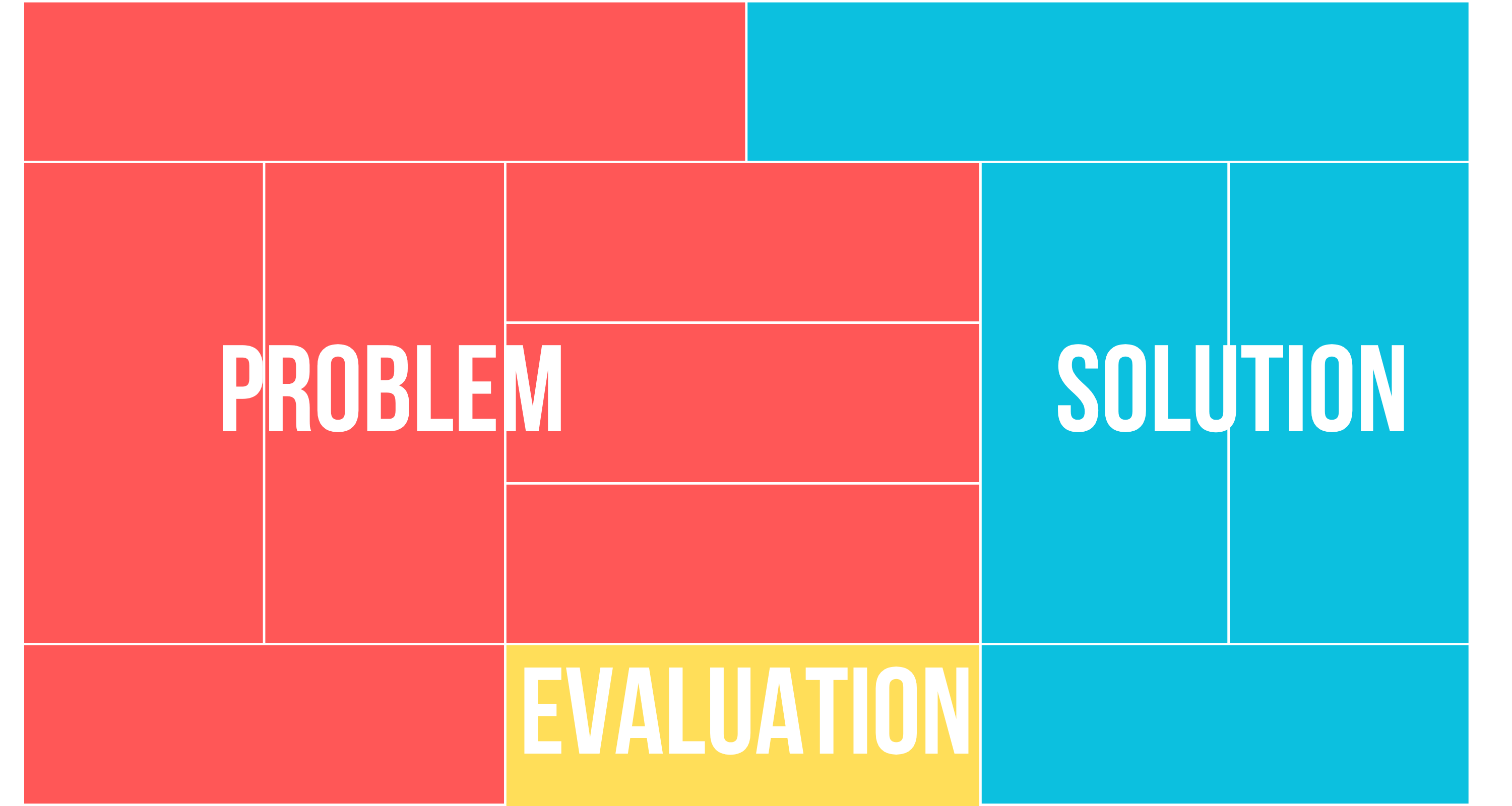
Seven boxes. A plain statement of the problem, the customer's objectives and the requirements your evaluation criteria came from, the three metrics in the middle (business, operational and product), which measure the problem in units the customer already uses, and one figure: the cost of the problem.
Solution
Four boxes. What you propose, the services in it, the value the POC evidence supports, and the cost of the solution.
Evaluation
One box. The cost of the problem minus the cost of the solution over the contract term, written as a sum the customer can check. When the solution removes only part of the problem, and only from a start date, the sum uses the part it removes.
Who it is for
- AI automation freelancers and agenciesCosting a manual process
- Solutions engineers and pre-salesTechnical evaluations
- Founders, consultants and freelancersSelling your own work
- Account executivesDeals drifting to no decision
- Sales managers and enablement leadsTeam training
Who made it

Paul Baillie has worked in enterprise technology since 2003, first running projects and services, then selling cloud and managed services and, more recently, AI infrastructure to large companies. He spent 12 years growing one account from $30m to $110m in annual recurring revenue, and has exceeded quota in each of his 14 years in direct sales. He wrote the canvas down in 2023 to describe the approach he used.
These are Paul’s own results, not a forecast of yours.
When you want the full method
The canvas is free and works on its own. The Solution Strategizer toolkit is what Paul would use to fill it in on a real deal: the 2026 edition of the book, which follows one deal through all twelve boxes; a page of discovery questions for each box; three worked examples with every calculation shown; and templates for the business case, the proposal and the emails around them. It’s $79, with a 30-day refund.
Get the free canvas
The blank canvas as a one-page download, sent to your inbox now. A few short emails follow over the next week or so, including a worked example, and you can unsubscribe from any of them.